The Advantages of Design/Build for Tenant Improvements
Tenant improvement projects can vary greatly in scope, but they all share a common goal: to customize spaces that meet the specific needs of tenants while maximizing efficiency and budget control. For commercial property owners and business tenants, the design/build approach has become an increasingly popular method for completing these projects seamlessly and effectively. Below, we explore how the design/build process can benefit tenant improvement projects and why this model is often the best choice for achieving high-quality, on-time, and on-budget results.
What is the Design/Build Model?
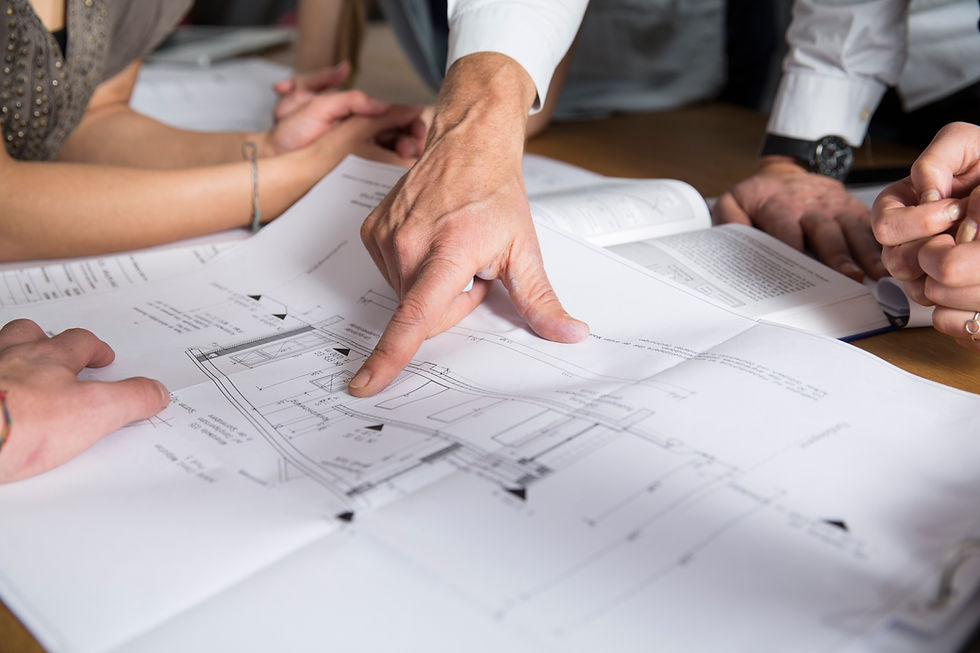
The design/build model is a project delivery system where a single contractor is responsible for both the design and construction of a project. This contrasts with the traditional design-bid-build model, where the design and construction phases are managed by separate entities, often leading to increased costs, longer timelines, and a greater risk of miscommunication. In design/build, the general contractor, designers, and other stakeholders work collaboratively from the project's inception, creating a more streamlined, efficient process.
Benefits of Design/Build for Tenant Improvements
1. Enhanced Communication and Collaboration
In tenant improvement projects, alignment between the tenant's vision and the completed space is critical. The design/build model fosters early and continuous communication between designers, contractors, and clients. Because the contractor and designer work under a single contract, there’s a unified approach to decision-making, which reduces miscommunications and ensures that the project remains focused on the tenant’s needs.
2. Faster Project Timelines
One of the most significant advantages of design/build is its ability to accelerate project timelines. Since design and construction occur simultaneously and under one contract, the process eliminates the delays that often happen when waiting for approvals between separate entities. Design/build teams can begin construction while parts of the design are still being finalized, enabling a faster project delivery. For tenant improvements, this efficiency can make a big difference in minimizing downtime and allowing tenants to occupy the space sooner.
3. Cost Savings and Budget Control
Budget is always a top priority in tenant improvement projects. With the design/build approach, costs are typically established earlier in the process, giving clients greater transparency and control. The design/build team works closely with the tenant or building owner to make value-engineered decisions that align with the project budget without compromising quality. Additionally, having a single point of accountability helps prevent unexpected cost overruns and change orders, as there is a coordinated approach to planning and execution.
4. Reduced Risk and Simplified Accountability
The design/build model consolidates all responsibilities under one contract, reducing risk for the project owner. This unified approach means there’s a single point of accountability for both design and construction. In the event of an issue, clients do not have to navigate between an architect and a contractor to identify the source of the problem. This streamlined accountability is especially beneficial in tenant improvement projects, where minimizing disruptions and ensuring quality are essential.
5. Design Flexibility
Tenant improvement projects often require creative solutions to make the most out of limited or awkwardly shaped spaces. The design/build approach provides flexibility by allowing changes to be made more fluidly than in traditional project structures. When tenants request changes or adjustments during construction, the integrated design/build team can quickly assess feasibility and cost implications, making it easier to adapt the project in real-time without significant disruptions.

6. Focus on Quality and Innovation
The design/build process encourages a collaborative, team-focused approach that tends to drive high-quality results. Working together from the beginning allows for innovative design solutions that meet the tenant’s requirements and add aesthetic and functional value to the space. Design/build teams often leverage the latest materials, technologies, and construction methods to create efficient, modern spaces that tenants and property owners can be proud of.
Conclusion
Design/build is an ideal project delivery model for tenant improvements, offering a streamlined process that enhances communication, saves time and money, and improves project quality. By working with a single, cohesive team, tenants and property owners can achieve custom spaces that meet their unique needs while staying within budget and minimizing disruptions.
If you’re planning a tenant improvement project and want a partner who understands the value of design/build, consider working with CS3 Builders. With our design/build team, we can transform any space into an environment that works for you and your company for years to come.


Comments